Is State Minimum Car Insurance Enough? Liability Limits Explained
Is state minimum car insurance enough? What limits like 25/50/25 mean, the minimum in every state, and how to choose liability that protects you.
Key takeaways
- State minimum car insurance meets the law, but it is often not enough to pay for a serious injury or a newer vehicle.
- Limits like 30/60/25 mean $30,000 per injured person, $60,000 per accident for injuries, and $25,000 for property damage.
- If a judgment exceeds your limits, you can be personally responsible for the rest.
- Several states have raised their minimums recently, including California in 2025, Virginia in 2025, North Carolina in 2025, Massachusetts in 2025, and New Jersey and Hawaii in 2026.
- A common starting point is 100/300/100, with higher limits or an umbrella policy as your net worth grows.
On this page
- What do car insurance liability limits mean?
- What is the minimum car insurance in each state?
- Why is the state minimum often not enough?
- How much car insurance liability should you have?
- What other coverage do some states require?
- What about collision and comprehensive?
- Compare your state minimum with what you own
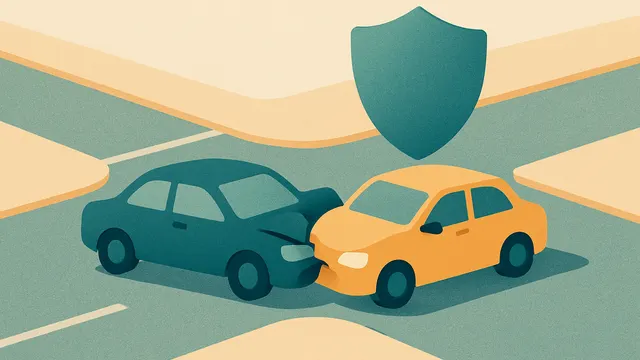
State minimum car insurance is enough to drive legally, but it is often not enough to protect you. Minimum liability limits were set to make sure some money is available after a crash, not to cover the full cost of a serious injury or a newer car. If the damage you cause is larger than your limits, the rest can become your personal debt.
So, is state minimum car insurance enough for you? It depends on what you have to protect and how much risk you can carry. This guide explains what liability limits mean, shows the current minimum in every state, walks through a worked example of a minimum-limits crash, and gives a simple way to choose better limits.
What do car insurance liability limits mean?
Liability limits are written as three numbers, in thousands of dollars: bodily injury per person, bodily injury per accident, and property damage per accident. They are the most your insurer will pay to other people for a crash you cause.
The Texas Department of Insurance uses exactly this example: Texas requires at least $30,000 per person, $60,000 per accident and $25,000 for property damage, called 30/60/25 coverage. Bodily injury liability can pay others’ medical bills, lost wages and pain and suffering; property damage liability pays for their car, a fence, a building or other property.
Liability does not pay for your own injuries or your own car. Those are covered by other parts of a policy, such as collision, comprehensive, medical payments, personal injury protection or uninsured motorist coverage.
What is the minimum car insurance in each state?
Every state except New Hampshire requires drivers to carry liability insurance or prove they can pay for damage they cause, and Florida uses a different no-fault model. The table below lists the minimum liability limits in all 50 states and DC, with each state’s official source and the date we checked it.
| State | Bodily injury (person / accident) | Property damage | Also required / notes | Source |
|---|---|---|---|---|
| Alabama | $25,000 / $50,000 | $25,000 | — | Alabama Department of Insurance |
| Alaska | $50,000 / $100,000 | $25,000 | — | Alaska Division of Insurance |
| Arizona | $25,000 / $50,000 | $15,000 | — | Arizona Department of Transportation, MVD |
| Arkansas | $25,000 / $50,000 | $25,000 | — | Arkansas Insurance Department |
| California | $30,000 / $60,000 | $15,000 | Raised from 15/30/5 for policies issued or renewed on or after January 1, 2025. | California Department of Insurance |
| Colorado | $25,000 / $50,000 | $15,000 | — | Colorado Division of Insurance |
| Connecticut | $25,000 / $50,000 | $25,000 | Uninsured and underinsured motorist coverage is also required. | Connecticut Insurance Department |
| Delaware | $25,000 / $50,000 | $10,000 | Personal injury protection (PIP) of $15,000 per person / $30,000 per accident is also required. | Delaware Department of Insurance |
| District of Columbia | $25,000 / $50,000 | $10,000 | Uninsured motorist coverage is also required. | DC Department of Insurance, Securities and Banking |
| Florida | Not required | $10,000 | Florida requires $10,000 personal injury protection (PIP) and $10,000 property damage liability. Bodily injury liability is not required for most drivers, but can be required after certain crashes or violations. | Florida Department of Highway Safety and Motor Vehicles |
| Georgia | $25,000 / $50,000 | $25,000 | — | Georgia Office of Commissioner of Insurance and Safety Fire |
| Hawaii | $40,000 / $80,000 | $20,000 | Raised from 20/40/10 for new and renewal policies on or after January 1, 2026. $10,000 PIP is also required. | Hawaii Insurance Division |
| Idaho | $25,000 / $50,000 | $15,000 | — | Idaho Department of Insurance |
| Illinois | $25,000 / $50,000 | $20,000 | Uninsured motorist coverage (25/50) is also required. | Illinois Department of Insurance |
| Indiana | $25,000 / $50,000 | $25,000 | — | Indiana Bureau of Motor Vehicles |
| Iowa | $20,000 / $40,000 | $15,000 | — | Iowa Insurance Division |
| Kansas | $25,000 / $50,000 | $25,000 | PIP and uninsured/underinsured motorist coverage are also required. | Kansas Insurance Department |
| Kentucky | $25,000 / $50,000 | $25,000 | $10,000 PIP is required unless you reject it in writing. A $75,000 combined single limit can be used instead of split limits. | Kentucky Department of Insurance |
| Louisiana | $15,000 / $30,000 | $25,000 | — | Louisiana Department of Insurance |
| Maine | $50,000 / $100,000 | $25,000 | Uninsured/underinsured motorist coverage (50/100) and $2,000 medical payments coverage are also required. | Maine Bureau of Insurance |
| Maryland | $30,000 / $60,000 | $15,000 | Uninsured motorist coverage and $2,500 PIP (which can be waived) are also required. | Maryland Insurance Administration |
| Massachusetts | $25,000 / $50,000 | $30,000 | Raised from 20/40/5 for policies written or renewed on or after July 1, 2025. $8,000 PIP and uninsured motorist coverage (25/50) are also required. | Massachusetts Division of Insurance |
| Michigan | $50,000 / $100,000 | $10,000 | Default bodily injury limits are 250/500; you can choose 50/100 in writing. The $10,000 figure is property damage liability for crashes in other states; in Michigan, property protection insurance (PPI) of $1 million and PIP are also required. | Michigan Department of Insurance and Financial Services |
| Minnesota | $30,000 / $60,000 | $10,000 | No-fault PIP ($40,000: $20,000 medical and $20,000 non-medical) and uninsured/underinsured motorist coverage (25/50) are also required. | Minnesota Department of Commerce |
| Mississippi | $25,000 / $50,000 | $25,000 | — | Mississippi Insurance Department |
| Missouri | $25,000 / $50,000 | $25,000 | Uninsured motorist coverage (25/50) is also required. | Missouri Department of Commerce and Insurance |
| Montana | $25,000 / $50,000 | $20,000 | — | Montana Commissioner of Securities and Insurance |
| Nebraska | $25,000 / $50,000 | $25,000 | Uninsured and underinsured motorist coverage (25/50) is also required. | Nebraska Department of Insurance |
| Nevada | $25,000 / $50,000 | $20,000 | — | Nevada Division of Insurance |
| New Hampshire | $25,000 / $50,000 | $25,000 | Most drivers are not required to buy auto insurance, but you must be able to pay for damage you cause. If you do buy a policy, it must include at least these limits plus uninsured motorist and $1,000 medical payments coverage. | New Hampshire Insurance Department |
| New Jersey | $35,000 / $70,000 | $25,000 | Standard Policy minimums rose to 35/70/25 for policies issued or renewed on or after January 1, 2026. PIP ($15,000) is also required. A low-cost Basic Policy with much less protection is also allowed. | New Jersey Department of Banking and Insurance |
| New Mexico | $25,000 / $50,000 | $10,000 | — | New Mexico Office of Superintendent of Insurance |
| New York | $25,000 / $50,000 | $10,000 | Limits rise to $50,000/$100,000 for death. No-fault PIP ($50,000) and uninsured motorist coverage (25/50) are also required. | New York State Department of Motor Vehicles |
| North Carolina | $50,000 / $100,000 | $50,000 | Raised from 30/60/25 for policies issued or renewed on or after July 1, 2025. Uninsured/underinsured motorist coverage is also required. | North Carolina Department of Insurance |
| North Dakota | $25,000 / $50,000 | $25,000 | No-fault PIP ($30,000) and uninsured/underinsured motorist coverage (25/50) are also required. | North Dakota Insurance Department |
| Ohio | $25,000 / $50,000 | $25,000 | — | Ohio Department of Insurance |
| Oklahoma | $25,000 / $50,000 | $25,000 | — | Oklahoma Insurance Department |
| Oregon | $25,000 / $50,000 | $20,000 | PIP ($15,000) and uninsured/underinsured motorist coverage (25/50) are also required. | Oregon Division of Financial Regulation |
| Pennsylvania | $15,000 / $30,000 | $5,000 | $5,000 first-party medical benefits are also required. | Pennsylvania Insurance Department |
| Rhode Island | $25,000 / $50,000 | $25,000 | A $75,000 combined single limit can be used instead. | Rhode Island Department of Business Regulation |
| South Carolina | $25,000 / $50,000 | $25,000 | Uninsured motorist coverage (25/50/25) is also required. | South Carolina Department of Insurance |
| South Dakota | $25,000 / $50,000 | $25,000 | Uninsured and underinsured motorist coverage (25/50) is also required. | South Dakota Division of Insurance |
| Tennessee | $25,000 / $50,000 | $25,000 | A $65,000 combined single limit can be used instead. | Tennessee Department of Commerce and Insurance |
| Texas | $30,000 / $60,000 | $25,000 | — | Texas Department of Insurance |
| Utah | $30,000 / $65,000 | $25,000 | Raised from 25/65/15 on January 1, 2025. PIP ($3,000) is also required. | Utah Insurance Department |
| Vermont | $25,000 / $50,000 | $10,000 | Uninsured/underinsured motorist coverage (50/100/10) is also required. | Vermont Department of Financial Regulation |
| Virginia | $50,000 / $100,000 | $25,000 | Raised from 30/60/20 for policies issued or renewed on or after January 1, 2025. Uninsured/underinsured motorist coverage at the same limits is also required. | Virginia Department of Motor Vehicles |
| Washington | $25,000 / $50,000 | $10,000 | — | Washington Office of the Insurance Commissioner |
| West Virginia | $25,000 / $50,000 | $25,000 | Uninsured motorist coverage (25/50/25) is also required. | West Virginia Offices of the Insurance Commissioner |
| Wisconsin | $25,000 / $50,000 | $10,000 | Uninsured motorist coverage (25/50) and $1,000 medical payments coverage are also required. | Wisconsin Office of the Commissioner of Insurance |
| Wyoming | $25,000 / $50,000 | $20,000 | — | Wyoming Department of Insurance |
Minimums change. Recent increases include California (from 15/30/5 to 30/60/15 in 2025), Virginia (to 50/100/25 in 2025), Utah (to 30/65/25 in 2025), North Carolina (to 50/100/50 in July 2025) and Massachusetts (to 25/50/30 in July 2025). In 2026, New Jersey’s Standard Policy minimum rose to 35/70/25 and Hawaii’s rose to 40/80/20. Always confirm with your state insurance department before you buy.
Why is the state minimum often not enough?
Because the cost of a serious crash can easily exceed it. A single hospital stay, lost income during recovery and a replacement vehicle can each run into tens of thousands of dollars. When several people are hurt, the per-accident limit is shared among them.
The NAIC explains that if a lawsuit judgment or settlement is higher than your limit, you will have to pay the difference. The Texas Department of Insurance gives the same warning: minimum limits might be too low if you cause a multi-vehicle accident or total another driver’s car.
| Loss | Amount | Jamie’s policy pays | Left for Jamie |
|---|---|---|---|
| Person A injuries | $55,000 | $30,000 (per-person cap) | $25,000 |
| Person B injuries | $20,000 | $20,000 | $0 |
| Total injuries | $75,000 | $50,000 (under $60,000 per-accident cap) | $25,000 |
| SUV | $38,000 | $25,000 (property cap) | $13,000 |
| Total | $113,000 | $75,000 | $38,000 |
With 100/300/100, the same crash would have been fully covered. The difference in premium between those limits is usually far smaller than $38,000.
How much car insurance liability should you have?
Enough to cover a serious crash without reaching your savings. A simple approach based on net worth, which is the method the Coverlee auto liability checker uses:
| Your net worth | Liability limits to consider |
|---|---|
| Up to about $100,000 | 100/300/100 |
| About $100,000 to $500,000 | 250/500/100 |
| Over about $500,000 | 250/500/100 plus an umbrella policy |
If you have a higher-risk household, such as a teen driver or a long daily commute, lean toward the higher row. Our guide to personal liability and umbrella insurance explains how umbrella policies sit on top of auto limits.
What other coverage do some states require?
Many states require more than liability. Depending on where you live, the minimum can also include:
- Personal injury protection (PIP), which pays your own medical bills and some lost wages regardless of fault. Florida, New York, Michigan and several other states require it.
- Uninsured or underinsured motorist coverage, which pays you when the at-fault driver has no insurance or too little. Virginia, for example, requires it at the same limits as liability, according to the Virginia DMV.
- Medical payments coverage in a few states.
Our guide to uninsured motorist coverage explains why it is worth considering even where it is optional.
What about collision and comprehensive?
They are not part of the state minimum. Collision and comprehensive pay to repair or replace your own car, and a lender or leasing company usually requires them. Whether to keep them on an older car is a separate decision, covered in our guide to collision, comprehensive and deductibles.
Compare your state minimum with what you own
Pick your state in the Coverlee auto liability checker to see its minimum next to limits sized to your net worth, with the gap explained and a link to the state’s official source. It runs in your browser and saves nothing.
Try it here: Umbrella insurance calculator
Showing the worked example. Change any number to see your own result.
$1,000,000Suggested umbrella
You have about $900,000 to protect, which is $400,000 more than your underlying limits. A $1,000,000 umbrella policy would cover that gap.
- Suggested umbrella
- $1,000,000
- Exposure
- $900,000
- gap
- $400,000
- Umbrella needed at the end
- $1,000,000
Questions people ask
Is state minimum car insurance enough?
It satisfies the law, but it often is not enough to cover a crash that seriously injures someone or damages a newer vehicle. Anything above your limits can be claimed from you personally, so people with savings, home equity or a good income usually choose higher limits.
What does 25/50/25 mean on car insurance?
It means up to $25,000 for injuries to one person, up to $50,000 for all injuries in one accident, and up to $25,000 for property damage. Those are the most your insurer pays to others for a single crash you cause.
What happens if I cause an accident with only minimum coverage?
Your insurer pays up to your limits. If the injured people's costs are higher, they can seek the rest from you, which could include your savings and other assets. The NAIC notes that you would have to pay the difference.
How much car insurance liability should I have?
A common starting point is 100/300/100. If your net worth is above about $100,000, consider 250/500/100, and above about $500,000 consider an umbrella policy on top. Your own situation and budget should guide the final choice.
Which states changed their minimum car insurance recently?
Recent increases include California (30/60/15 from January 2025), Virginia (50/100/25 from January 2025), Utah (30/65/25 from January 2025), North Carolina (50/100/50 from July 2025), Massachusetts (25/50/30 from July 2025), New Jersey (35/70/25 from January 2026) and Hawaii (40/80/20 from January 2026).
Does state minimum insurance cover damage to my own car?
No. Liability insurance pays for other people's injuries and property. Damage to your own car is covered by collision and comprehensive coverage, which states do not require but lenders usually do.
Is it much more expensive to raise liability limits?
Often less than people expect. Ask your insurer to quote two or three limit levels; the extra cost of higher limits is usually smaller than the jump in protection.
Do I need more than the minimum if I have few assets?
Even with few assets, higher limits protect future savings and can protect wages in some states. They also make it more likely that someone you injure is fully compensated. If the budget is tight, ask what 50/100/50 or 100/300/100 would cost.
Sources
- Auto insurance guide — Texas Department of Insurance, accessed
- Auto Insurance — National Association of Insurance Commissioners (NAIC), accessed
- Insurance Requirements — Virginia Department of Motor Vehicles, accessed
- Everything Auto Insurance (2026) — New Jersey Department of Banking and Insurance, accessed
- Auto Minimum Limits FAQs — Hawaii Insurance Division, accessed
- 2025 New Motor Vehicle Mandatory Coverage Limits (bulletin) — Massachusetts Division of Insurance, accessed

Coverlee Editorial Team
The Coverlee Editorial Team researches, writes and checks every guide against official sources such as state insurance departments, the NAIC, FEMA, the IRS and the SSA.
Educational information, not insurance, legal or financial advice. Coverlee does not sell insurance. Last updated: October 18, 2026 · Spotted an error? Tell us