Uninsured Motorist Coverage: Do You Need It, and How Much?
Uninsured and underinsured motorist coverage pays you when the other driver has no insurance or too little. What it covers and how much to buy.
Key takeaways
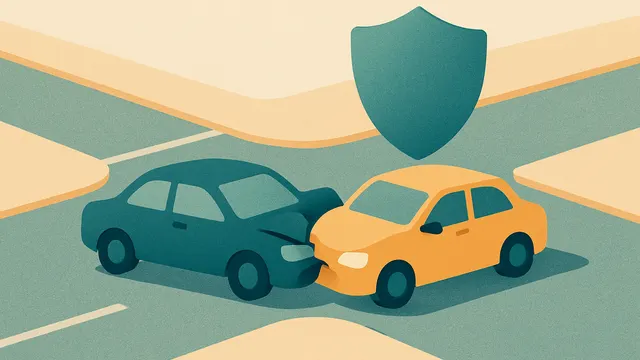
- Uninsured motorist (UM) coverage pays for your injuries when an at-fault driver has no insurance or in many hit-and-run crashes.
- Underinsured motorist (UIM) coverage pays when the at-fault driver's liability limits are too low to cover your losses.
- Some states require UM or UIM; others require insurers to offer it and let you reject it in writing.
- A common approach is to match your UM/UIM limits to your own liability limits.
- Because many drivers carry only minimum limits, UIM can matter even when the other driver is insured.
On this page
- What does uninsured motorist coverage cover?
- What is underinsured motorist coverage?
- Is uninsured motorist coverage required in my state?
- How much uninsured motorist coverage should you buy?
- Do you need UM if you already have health insurance?
- How does a UM or UIM claim work?
- Is uninsured motorist coverage worth it?
- Check your state’s rules and your limits
Uninsured motorist coverage pays for your injuries when a driver who causes a crash has no insurance, and in many states when you are hit by a driver who leaves the scene. Underinsured motorist coverage fills the gap when the at-fault driver has insurance but not enough. Together they protect you from other people’s thin coverage, which you cannot control.
Your own liability insurance protects other people from you. UM and UIM protect you from everyone else. This guide explains what each covers, how state rules differ, how much to buy, and how a claim works.
What does uninsured motorist coverage cover?
Uninsured motorist (UM) coverage pays for injuries to you and your passengers when an at-fault driver has no liability insurance. The NAIC notes that it protects you directly if you are hurt by a hit-and-run driver or a driver with no insurance.
It typically pays for:
- medical bills,
- lost wages,
- pain and suffering, where your state allows it,
- injuries to passengers in your car.
What is underinsured motorist coverage?
Underinsured motorist (UIM) coverage pays when the at-fault driver has liability insurance, but their limits are too low to cover your losses. It picks up after their policy pays out, up to your UIM limit.
UIM matters because many drivers carry only their state’s minimum, and those limits can be low compared with the cost of a serious injury. Our guide to state minimum car insurance shows how quickly a minimum-limits policy runs out.
Is uninsured motorist coverage required in my state?
It depends on where you live. States fall into roughly three groups:
| Approach | What it means | Examples from our state table |
|---|---|---|
| UM and UIM required | You must carry both | Connecticut, Kansas, Maine, Minnesota, Nebraska, North Carolina, Oregon, Virginia |
| UM required | You must carry uninsured motorist coverage | Illinois, Maryland, Massachusetts, Missouri, New York, South Carolina, West Virginia, Wisconsin |
| Must be offered | Insurers offer it; you can reject it, often in writing | Texas and many others |
Virginia, for example, requires uninsured and underinsured motorist coverage at the same limits as liability. Massachusetts’ 2025 bulletin lists bodily injury caused by an uninsured auto among its compulsory coverages. In Texas, insurers must offer UM/UIM, and you must reject it in writing if you do not want it.
Rules change and details vary, so check the state table on the Coverlee auto liability checker and confirm with your state insurance department.
How much uninsured motorist coverage should you buy?
A common approach is to match your UM/UIM limits to your own bodily injury liability limits. If you think 100/300 is the right amount to protect other people from you, the same amount is a sensible level of protection for you and your passengers.
| Your liability limits | UM/UIM limits to consider |
|---|---|
| State minimum | At least the same; consider more if you can |
| 100/300 | 100/300 |
| 250/500 | 250/500 |
| With an umbrella policy | Ask whether the umbrella can include UM/UIM |
Do you need UM if you already have health insurance?
Usually it still helps. Health insurance can pay medical bills, but it does not pay for lost wages, pain and suffering, or the deductibles and copays you owe. Your passengers may not have health insurance at all. UM fills those gaps when the other driver cannot pay.
If your state requires personal injury protection (PIP), PIP pays some medical costs and lost wages regardless of fault, and UM/UIM covers losses beyond that.
How does a UM or UIM claim work?
You file the claim with your own insurer, which then steps into the shoes of the at-fault driver’s missing or limited insurance. A few practical points:
- Call the police after any crash with injuries, and especially after a hit-and-run. The Texas Department of Insurance warns that UM coverage will not pay for a hit-and-run if you did not report it to police.
- Get the other driver’s details, including insurance information if they have any.
- Tell your insurer promptly, and ask how UIM interacts with the other driver’s insurer in your state.
- Expect a deductible for some UM property damage claims, as the Texas guide notes.
Is uninsured motorist coverage worth it?
For most drivers, yes. It protects you from a risk you cannot control: the choices other drivers make about their own insurance. It is generally one of the less expensive parts of an auto policy relative to the protection it offers, though prices vary by state and insurer. Ask for quotes with and without it to see the real difference for you.
Check your state’s rules and your limits
Pick your state in the Coverlee auto liability checker to see its minimum limits and any required UM/UIM or PIP, then compare those minimums with limits sized to your net worth. It runs in your browser and saves nothing. For more on protecting your savings, see our guide to personal liability and umbrella insurance.
Try it here: Underinsured motorist calculator
Showing the worked example. Change any number to see your own result.
$45,000Paid by your UIM coverage
The at-fault driver's insurer pays $25,000 and your UIM pays $45,000, so your losses are covered.
- At-fault driver's insurer
- $25,000
- Your UIM
- $45,000
- Left for you
- $0
- Share of losses covered
- 100%
Questions people ask
What is uninsured motorist coverage?
Uninsured motorist coverage pays for injuries to you and your passengers when a driver who is at fault has no liability insurance. In many states it also applies to hit-and-run crashes. Some states offer an uninsured motorist property damage option for your car.
What is the difference between uninsured and underinsured motorist coverage?
Uninsured motorist coverage applies when the at-fault driver has no insurance. Underinsured motorist coverage applies when the at-fault driver has insurance, but their limits are too low to pay all of your losses.
Do I need uninsured motorist coverage if I have health insurance?
It is still worth considering. Health insurance may cover medical bills but not lost wages, pain and suffering, or the deductibles and copays you face. UM coverage can also protect your passengers, who may not have health insurance.
Is uninsured motorist coverage required?
It depends on the state. Some states require uninsured motorist coverage, some also require underinsured coverage, and many others require insurers to offer it and let you reject it in writing. Check your state's rules or the state table in our auto liability checker.
How much uninsured motorist coverage should I get?
A common approach is to match your UM/UIM limits to your own bodily injury liability limits. If you chose 100/300 for liability, ask for 100/300 of UM/UIM, subject to what your state allows.
Does uninsured motorist coverage cover hit-and-run accidents?
In many states, yes, for injuries. Rules vary, and some policies require prompt police reports. The Texas Department of Insurance, for example, notes that UM coverage will not pay for a hit-and-run if you did not report it to police.
Does uninsured motorist coverage pay for my car?
Uninsured motorist bodily injury coverage pays for injuries, not vehicle damage. Some states offer uninsured motorist property damage coverage; otherwise collision coverage pays for your car, minus your deductible.
Is UM coverage expensive?
It is usually one of the less expensive parts of an auto policy compared with the protection it gives, though prices vary by state and insurer. Ask for quotes with and without it so you can see the difference.
Sources
- Auto Insurance — National Association of Insurance Commissioners (NAIC), accessed
- Auto insurance guide — Texas Department of Insurance, accessed
- Insurance Requirements — Virginia Department of Motor Vehicles, accessed
- 2025 New Motor Vehicle Mandatory Coverage Limits (bulletin) — Massachusetts Division of Insurance, accessed

Coverlee Editorial Team
The Coverlee Editorial Team researches, writes and checks every guide against official sources such as state insurance departments, the NAIC, FEMA, the IRS and the SSA.
Educational information, not insurance, legal or financial advice. Coverlee does not sell insurance. Last updated: October 18, 2026 · Spotted an error? Tell us